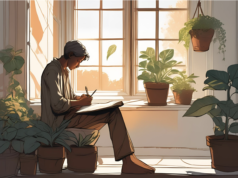



Like many young people, I used to be my own harshest critic. Every mistake, every failure felt monumental, like it revealed something essential about who I was. That inner voice was loud, unrelenting, exhausting.
But as I’ve gotten older, something shifted. The weight of mistakes no longer feels crushing. Regret doesn’t gnaw the way it used to. But for a while, I wasn’t sure if this was growth — or just the dulling of sharp edges with time.
But reading upon Kierkegaard’s biography, I came across how after he broke off his engagement to a Regine Olsen, it haunted him for years. He saw the decision as a sign that he was deeply flawed and unworthy of happiness. And he carried this guilt and relentless self-criticism right through his youth. I so resonated with his feelings here!
But as he grew older, he began to see such “failures” more and more as experiences. And with this shift in mindset, what once felt like a devastating mistake, became the foundation for his groundbreaking inquiries into love, despair, and selfhood.
Philosophy—real philosophy—isn’t just found in books. It’s lived. It’s earned.
No one becomes wise by collecting profound quotes.
We don’t gain wisdom just by reading about regret, longing, or failure. We only truly understand them when we’ve lived through them—when life makes us wrestle with loss, when our desires go unfulfilled, when we face the consequences of choices we can’t undo. A quote about love, despair, or resilience might seem profound when we first read it, but it’s only after we’ve stumbled through love, felt the weight of despair, or endured something that tested us, that those words begin to mean something.
This is why experience matters. It doesn’t just add years to our lives—it shapes us. It forces us to move beyond theory and face reality as it is. What once felt like ruin becomes the ground where something deeper can grow. And the real difference time makes isn’t that we stop making mistakes, but that we learn how to sit with them, learn from them, and turn them into something more than regret.
Philosophy—real philosophy—isn’t just found in books. It’s lived. It’s earned. And in that process, what once felt like an unbearable weight becomes the very thing that gives us depth.