





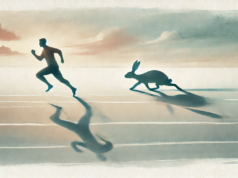
The Ultimate Life Hack: Stop Trying to Hack Life!

Everywhere I turn, there’s someone offering me a solution for long-standing problems of life.
Find Your True Love with these Three Easy Steps!
Say Goodbye to Procrastination Forever!
How to Self-Transform in Just Two Weeks!
The promise is as unbelievable as it is intoxicating. Problems I’ve wrestled with for 40-odd years, now supposedly solvable with a clever tip or a quick trick.
But deep down, we know how that goes.
The allure of the “hack” has infiltrated everything—our careers, relationships, even our sense of self. But where did this idea originate from?And why did it become so viral and then a cult in itself?
And, most importantly, why does it often leave us feeling more disconnected than fulfilled?
Origins: From Programming to Pop Culture

A little investigation revealed that the concept of a “hack” originated in the tech world of the early 2000s that I myself was a part of. As a back-end programmer, I often faced repetitive, tedious tasks that consumed too much time. For instance, debugging and optimising a database query would sometimes involve hundreds of lines of code — painstaking, time-intensive work. Hacks were clever shortcuts we would pick up from each other, helping us streamline such tasks, saving time and mental bandwidth.
But as the idea of a “hack” gained traction, it morphed into something far bigger than its original scope. Blogs, productivity books, and social media rebranded hacks as practical tips for all aspects of life. They promised ways to simplify not just mundane chores, like organising your desk or meal prepping, but also life’s biggest challenges: finding meaning, eliminating anxiety, and transforming oneself into a “better” person. Whatever that meant.
Life isn’t about being perfect—it’s about being present
Why Life Hacks Fail
Life hacks offer the illusion of quick solutions to complex problems. They thrive on the belief that life can be optimised, much like a piece of software. But life is not a code or gadget to be debugged. It’s messy, emotional, and deeply personal. Here’s why life hacks often fall short:
- They Ignore Deeper Issues
Many hacks focus on surface-level fixes without addressing the underlying causes of our struggles. For instance:
“Overwhelmed by your inbox? Set up auto-replies and filters!”
But what if the real issue is your inability to set boundaries with work? Or, “Feeling unmotivated? Start your day with a cold shower!”
But what if you’re dealing with burnout or depression? Life hacks are like applying a band-aid to a wound that needs stitches—they don’t go deep enough to truly heal. - The Over-optimisation Trap The obsession with productivity has made us view every moment of our lives as something that must be optimised. We turn hobbies into side hustles, cram our schedules with self-improvement tasks, and measure our worth by how much we can accomplish. But in doing so, we often lose sight of what truly matters: rest, play, connection, and simply being.
- The Illusion of Control Life hacks promise control over chaos, yet much of life—relationships, health, and unforeseen events—remains unpredictable. No hack can prepare you for the messiness of human emotions or the randomness of life. And when these hacks fail, as they inevitably do, we’re left feeling more anxious and inadequate than before.
It’s about how deeply you love, how deeply you work, and how deeply you connect with yourself, others, and the world around you
Why We Keep Chasing Hacks
So why do we keep falling for the promise of life hacks, even when they often fail to deliver?
At the heart of it lies our cultural obsession with productivity and efficiency. Society has conditioned us to tie our self-worth to how much we achieve. We’re told that success is about being faster, smarter, and more efficient than everyone else.

This mindset has turned projects and careers into the central meaning of our lives. Instead of seeing them as small, manageable parts of a greater whole, we’ve deluded ourselves into thinking that life itself can be fine-tuned like a machine. If we just find the right hack, we believe, we can eliminate struggle and unlock the perfect life.
But life isn’t about being perfect—it’s about being present.
What Life Is Really About
True personal growth doesn’t come from shortcuts. It comes from slow, deliberate effort and an acceptance of life’s inherent messiness. Here’s what we often overlook in our quest for hacks:
- The Value of Depth Over Speed Life is not a race. It’s about how deeply you love, how deeply you work, and how deeply you connect with yourself, others, and the world around you. These things can’t be hacked; they require time, patience, and mindfulness.
- The Power of Rest and Play In our rush to be productive, we’ve forgotten the importance of simply existing. Rest and play aren’t luxuries—they’re essential for a fulfilling life. They nourish our creativity, restore our energy, and remind us of life’s simple joys.
- Embracing Uncertainty Life will always be unpredictable, and that’s okay. Instead of trying to control every aspect of it, we can learn to navigate uncertainty with resilience and grace. This means cultivating qualities like patience, self-awareness, and gratitude—things that can’t be found in a hack.
Living Beyond the Hack

So, what’s the alternative to a life full of hacks? It’s a life rooted in mindfulness and intentionality.
So in the spirit of a life-hack, I offer here four steps to embrace this approach. 🙂
- Take Time to Reflect: Instead of rushing to fix problems, take a step back and ask yourself what’s really at the root of your struggles. Often, the answer lies deeper than any quick fix can reach.
- Be patient and kind to yourself: The answers you will come with are not going to be easy to put in action. And don’t judge yourself harshly when you fail because you are working against years of conditioning, trauma, habits and personality. Change will be slow, but this trickle will become a larger flow with time and persistence. Celebrate whatever progress you make, knowing how earned even that little was.
- Prioritise What Matters: But you can begin with exploring and focusing on the things that truly bring you joy and fulfilment. Let go of the need to optimise every aspect of your life and make space for rest, connection, and play.
- Practice Gratitude: Life is fleeting and imperfect, but it’s also full of beauty. Take time to appreciate the moments, big and small, that make it worthwhile.
Conclusion: There Is No Hack for Life
I am not advising you to abandon life hacks as they can keep offering small wonderful tips to organise your desk, managing your inbox, or saving time in the kitchen. But when it comes to the deeper, more meaningful aspects of life, there are no shortcuts.
Personal growth, meaningful connections, and a sense of purpose don’t come from clever tricks or quick fixes. They come from slow, intentional living—embracing life’s messiness, navigating its unpredictability, and finding joy in the journey.
Life is not about how much you can optimise; it’s about how deeply you can live. And that’s something no hack will ever teach you.