


Wellness

Home Wellness

If Success Means 70-Hour Weeks, Is It Even Success?
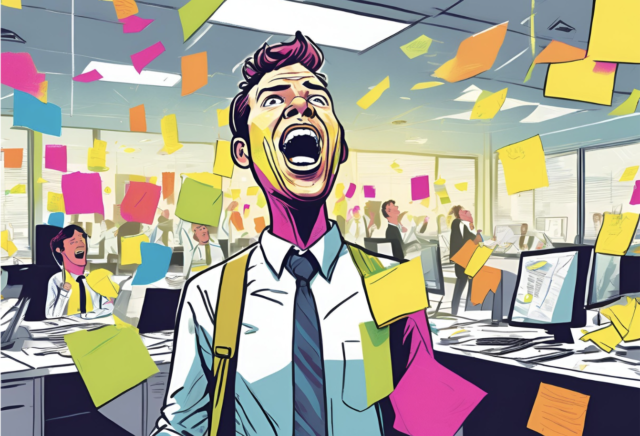
If you live in Bangalore, you see it every day. The same tired faces, trapped in traffic—morning and night. The dull quiet of the office cafeteria at 9 PM, where dinner feels like an extension of work, not a break from it. Weeks of trying to meet a friend—only for work to cancel it at the last minute.
The exhaustion isn’t just physical; it’s something deeper, like the air itself is heavier with the weight of long hours and unfinished to-dos.
So when Narayana Murthy says that we Indians should work 70-hour weeks to build the nation, it doesn’t quite land as inspiration. It feels unfair.
We are already burning out our bodies, our years, our lives. What exactly are we getting in return for this endless overtime? What, really, are we trying to prove?

It’s easy to romanticise long hours when you’re a honcho or a founder. You can afford to equate relentless work with national progress or personal virtue. But what does it mean to the people on the ground? Forget nation-building—research shows that it doesn’t even lead to better results for companies. Just more burnout.
A recent Leaders.com article confirmed what many of us already feel—this isn’t just opinion, the research backs it:

  • Productivity sharply declines beyond 55 hours a week. After that, you’re not working better or smarter—you’re just working more.
  • Chronic overwork increases stress, weakens decision-making, and even shortens life expectancy.
  • The real winners in hustle culture are not the workers putting in extra hours, but the companies benefiting from free labour.

So if we already intuitively know this, why do we still believe in the hustle?

The Indian middle class is particularly vulnerable to thinking that we have to always work more because we are only a generation or two away from scarcity. We saw our parents put in long hours, not because they wanted to, but because they had no choice. Somewhere along the way, this necessity hardened into a virtue.

But here’s the truth:

A 70-hour workweek is not a sign of discipline. It is a sign of inefficiency, poor systems, and a broken work culture.

Because If working hours were the measure of productivity and success, are the people getting laid off working any less than others?

I don’t doubt that Murthy means well. But we should be careful about who gets to write the narrative of success. Because when people in power say ‘work harder,’ they are not the ones paying the price.
Someone in a previous article commented with a quote from Thoreau:

“The price of anything is the amount of life you exchange for it.”

And what is the real price of those extra 15-20 hours squeezed out of us every week?

  • The friendships we no longer have time for.
  • The small, golden moments with parents and children growing up—that won’t come again.
  • The version of ourselves that once had energy for things beyond work—evaporating, like unopened perfume, fading before it’s ever used.
    And this is not even counting the life-sapping commute.

Success isn’t just about how much you work. It’s about whether your work is actually building the life you want.
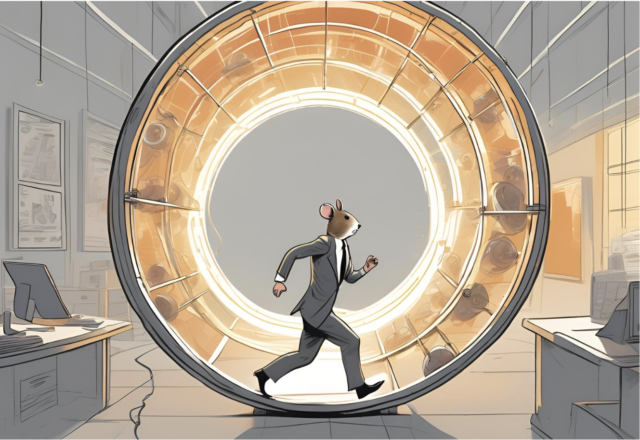
Hustle culture makes people forget they have a choice. But owning your story means stepping off the treadmill long enough to ask: Is this the life I meant to live?
Because if success comes at the cost of everything else—is it even success?

How Getting Older Expands Our Heart

In my 20s, the thought of my approaching 30s felt like some other planet. The older people around me seemed to belong to a different era; their lives marked by concerns I couldn’t understand. But as the years passed and my 40s arrived, something shifted. Suddenly, I could see the people ahead of me—those 10, 20, or even 40 years older—in a different light. It was like I was crossing an invisible membrane I hadn’t realised was there. Their experiences that had once seemed so distant, began to feel closer. More comprehensible.

You stop looking at people through the lens of your own needs, and start seeing them for who they really are

When you’re young, you spend so much energy chasing approval, achievements, or even just trying to figure yourself out. Everything feels urgent, and your insecurities feel all-encompassing. But as you grow older, a lot of those things just start to fall away. The things you once thought were critical to your identity — how people see you, whether you’re doing “enough”—starts to matter less. You realise that no one is watching you as closely as you thought. That it’s not all about you. And honestly, that realisation is so freeing.

When all that mental clutter begins to shrink, something unexpected begins to take root in its place: understanding. You stop looking at people through the lens of your own needs, and start seeing them for who they really are. Philosopher Martin Buber talked about two ways we connect with others: “I-It” relationships, where we see people as roles or objects, and “I-Thou” relationships, where we truly meet them as whole, complex beings. Getting older nudges you toward the second kind. You’re not trying to measure people against what they mean to you anymore—you just see them. And that changes everything.

I often remember my grandparents and wish I’d known them better: not just as grandparents but as people. Asked them what their dreams were, their struggles, regrets. I had some of these conversations with my Nani, who was a friend, and these are among my most precious memories. But how much more I could have understood her and others if I’d had then the empathy I have now. How much deeper I could have experienced their lives beside mine own.

We’re taught to fear getting older, as if it’s a steady erosion of vitality or significance. But the slow letting go of youth and its ego creates space for something deeper. It brings us this profound gift of empathy. A way of seeing and understanding others that enriches your relationships and your sense of self.

Getting older, in this way, is not a loss but an expansion, a broadening of the heart and mind. And perhaps that’s its greatest gift.

The Philosophy of Regret: How Experience Shapes Us

Like many young people, I used to be my own harshest critic. Every mistake, every failure felt monumental, like it revealed something essential about who I was. That inner voice was loud, unrelenting, exhausting.
But as I’ve gotten older, something shifted. The weight of mistakes no longer feels crushing. Regret doesn’t gnaw the way it used to. But for a while, I wasn’t sure if this was growth — or just the dulling of sharp edges with time.
But reading upon Kierkegaard’s biography, I came across how after he broke off his engagement to a Regine Olsen, it haunted him for years. He saw the decision as a sign that he was deeply flawed and unworthy of happiness. And he carried this guilt and relentless self-criticism right through his youth. I so resonated with his feelings here!
But as he grew older, he began to see such “failures” more and more as experiences. And with this shift in mindset, what once felt like a devastating mistake, became the foundation for his groundbreaking inquiries into love, despair, and selfhood.

Philosophy—real philosophy—isn’t just found in books. It’s lived. It’s earned.

No one becomes wise by collecting profound quotes.
We don’t gain wisdom just by reading about regret, longing, or failure. We only truly understand them when we’ve lived through them—when life makes us wrestle with loss, when our desires go unfulfilled, when we face the consequences of choices we can’t undo. A quote about love, despair, or resilience might seem profound when we first read it, but it’s only after we’ve stumbled through love, felt the weight of despair, or endured something that tested us, that those words begin to mean something.
This is why experience matters. It doesn’t just add years to our lives—it shapes us. It forces us to move beyond theory and face reality as it is. What once felt like ruin becomes the ground where something deeper can grow. And the real difference time makes isn’t that we stop making mistakes, but that we learn how to sit with them, learn from them, and turn them into something more than regret.
Philosophy—real philosophy—isn’t just found in books. It’s lived. It’s earned. And in that process, what once felt like an unbearable weight becomes the very thing that gives us depth.

Rethinking Success: The Ones Who Walk with Intention

I used to think success had an expiry date. That if I didn’t ‘make it’ by 30, I would somehow fade into irrelevance.

I wasn’t alone. Everyone around me was running too—because that’s what we had been taught. The better your academic results, the more pressure to achieve. The milestones were laid out for us: top schools, top jobs, rapid promotions, visible success.

And it felt urgent. Like life had a window, and if you didn’t climb through it in time, you’d be stuck on the wrong side forever.

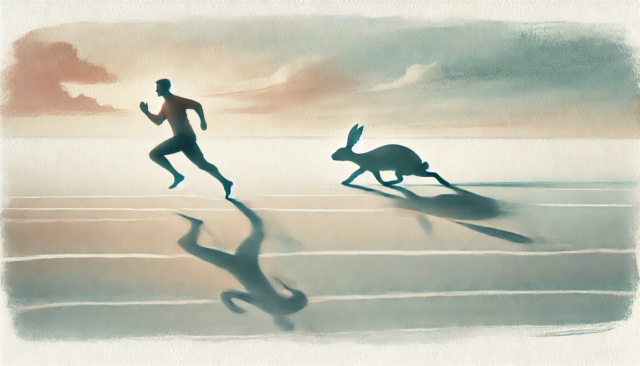
You knew they’d still be here in ten, twenty years, doing work that mattered—long after the sprinters had burned out.

But now, looking back, I see things differently. The people who made the deepest impact on me—the ones who earned my lasting respect—were not the young executives in tailored suits, climbing incredible trajectories, riding high on early wins. Strangely enough, they were the ones who seemed… unambitious.

Not mediocre. Not passive. Just—not in a hurry.

They weren’t fixated on the next title, the next jump. They cared more about understanding how things actually worked. Not just in business decks, but in the real world. They knew the back doors, the right calls to make, the places where the system had slack.

And somehow, in the way they carried themselves, you knew they’d still be here in ten years, doing work that mattered—long after the sprinters had burned out. Or jumped ship when a crisis erupted.

From what I have observed, these long-haul people share three things in common. Not a motto, not a philosophy—just a way of being.

First, they chase Mastery. They are not in a rush to be seen. They take their time to truly understand their work, their industry, their skills. They can do what others only talk about in meetings.

They aim for Balance. They are not grinding just for the sake of it. They know how to manage their energy, priorities, and the much debated work-life balance.

And they have a great Perspective. They have nothing to prove and nothing to hide. They work with a kind of quiet confidence, even humour—the kind that comes from knowing your stuff as good as anyone else, if not better.

I consider myself greatly lucky that many of them became close friends. And they taught me things beyond work, things that have stayed with me. Because the way people work is the way they live.

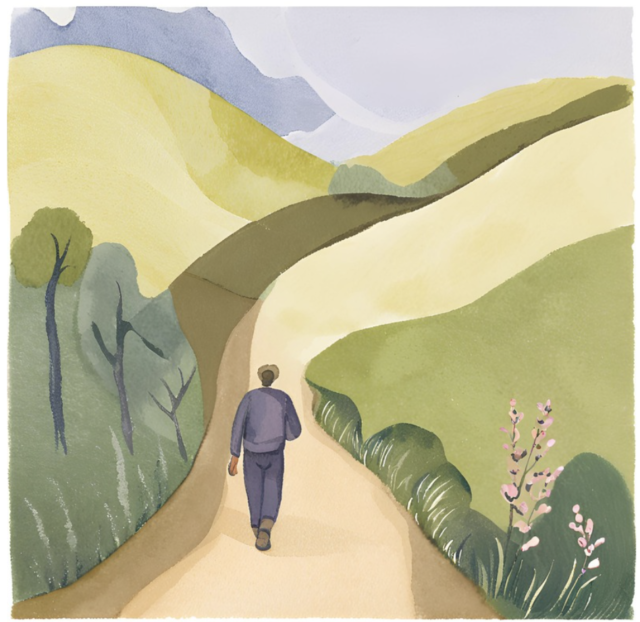
Some people sprint ahead, and I say let them. But there are others who choose to walk with intention. Because in the end, it’s not who got there first—it’s who still has something worth saying when they do.

When Roads Close: Embracing the Art of Imperfection

The first novel I intended to write, inspired by Saramago’s style, was about a man who, upon learning he has only a year to live, decides to retrace his steps and resolve everything he has left unfinished—from yesterday all the way back to childhood.

I never wrote it beyond a few chapters, but the idea of things piling up that are seeking closure must have haunted me since college, because that’s when this novel was stillborn.

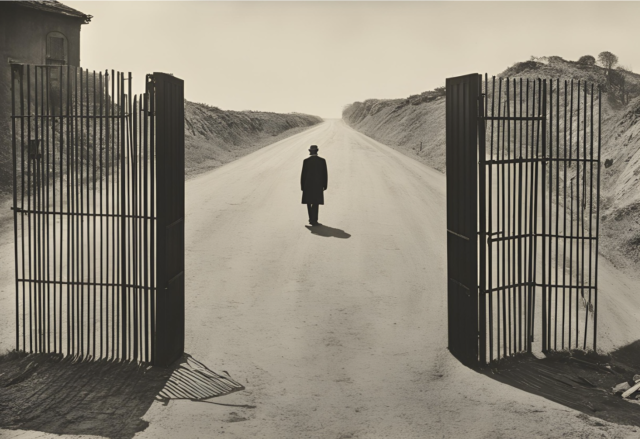
The things we never do for ourselves, the forks we could have taken, the unmade calls and the unspoken words. And the more the years pass, the more the roads behind are closed for good. Houses are sold, friends have moved oceans away, a parent dies.

Perhaps this is why, as we grow older, we naturally become more stoic. There’s only so much regret we can carry before it becomes too heavy to bear. We finally tell ourselves that what’s done is done, and what remains unfinished may never be completed. That we can only act in the present moment and accept the rest as it is.

But there is another way to look at these regrets. A philosophy concretised in the strange Japanese art of repairing broken ceramics with gold, kintsugi

Why would anyone highlight cracks, instead of using the usual transparent glue and hoping no one notices the cracks?
It wasn’t until I read about it that I discovered it was rooted in the Japanese aesthetic philosophy of Wabi-Sabi, which celebrates imperfection. Finding beauty in what is transient and unfinished. 

I love this rich idea. It has shifted my taste in what I read and watch – I no longer seek neatly resolved plots but instead relish the beauty of hanging threads. (My review of All we Imagine as Light touched upon the same theme.)

Wabi-sabi as a philosophy has helped me to shift focus from what I lacked to what I do have. From what I did not do, to what I did end up doing. It has made me embrace the life that partly I chose and which mostly happened to me; made me celebrate the people around me.

As I grow older, more people and opportunities will slip away from me. But I no longer seek a perfection in my life, but instead see it as a mosaic made of shards that survived and the cracks that hold them together. These regrets and dreams deferred are not flaws—they are what make my life uniquely my own. The things we leave undone are not burdens to bear but reminders of life’s true nature—its strange, cracked beauty.

Perhaps the truest form of closure is not in tying every loose end, but in the art of letting go: in embracing what we still have.

The Ultimate Life Hack: Stop Trying to Hack Life!

Everywhere I turn, there’s someone offering me a solution for long-standing problems of life.

Find Your True Love with these Three Easy Steps!
Say Goodbye to Procrastination Forever!
How to Self-Transform in Just Two Weeks!

The promise is as unbelievable as it is intoxicating. Problems I’ve wrestled with for 40-odd years, now supposedly solvable with a clever tip or a quick trick.
But deep down, we know how that goes.

The allure of the “hack” has infiltrated everything—our careers, relationships, even our sense of self. But where did this idea originate from?And why did it become so viral and then a cult in itself?
And, most importantly, why does it often leave us feeling more disconnected than fulfilled?


Origins: From Programming to Pop Culture

A little investigation revealed that the concept of a “hack” originated in the tech world of the early 2000s that I myself was a part of. As a back-end programmer, I often faced repetitive, tedious tasks that consumed too much time. For instance, debugging and optimising a database query would sometimes involve hundreds of lines of code — painstaking, time-intensive work. Hacks were clever shortcuts we would pick up from each other, helping us streamline such tasks, saving time and mental bandwidth.

But as the idea of a “hack” gained traction, it morphed into something far bigger than its original scope. Blogs, productivity books, and social media rebranded hacks as practical tips for all aspects of life. They promised ways to simplify not just mundane chores, like organising your desk or meal prepping, but also life’s biggest challenges: finding meaning, eliminating anxiety, and transforming oneself into a “better” person. Whatever that meant.

Life isn’t about being perfect—it’s about being present

Why Life Hacks Fail

Life hacks offer the illusion of quick solutions to complex problems. They thrive on the belief that life can be optimised, much like a piece of software. But life is not a code or gadget to be debugged. It’s messy, emotional, and deeply personal. Here’s why life hacks often fall short:

  1. They Ignore Deeper Issues
    Many hacks focus on surface-level fixes without addressing the underlying causes of our struggles. For instance:
    “Overwhelmed by your inbox? Set up auto-replies and filters!”
    But what if the real issue is your inability to set boundaries with work? Or, “Feeling unmotivated? Start your day with a cold shower!”
    But what if you’re dealing with burnout or depression? Life hacks are like applying a band-aid to a wound that needs stitches—they don’t go deep enough to truly heal.
  2. The Over-optimisation Trap The obsession with productivity has made us view every moment of our lives as something that must be optimised. We turn hobbies into side hustles, cram our schedules with self-improvement tasks, and measure our worth by how much we can accomplish. But in doing so, we often lose sight of what truly matters: rest, play, connection, and simply being.
  3. The Illusion of Control Life hacks promise control over chaos, yet much of life—relationships, health, and unforeseen events—remains unpredictable. No hack can prepare you for the messiness of human emotions or the randomness of life. And when these hacks fail, as they inevitably do, we’re left feeling more anxious and inadequate than before.

It’s about how deeply you love, how deeply you work, and how deeply you connect with yourself, others, and the world around you

Why We Keep Chasing Hacks

So why do we keep falling for the promise of life hacks, even when they often fail to deliver?

At the heart of it lies our cultural obsession with productivity and efficiency. Society has conditioned us to tie our self-worth to how much we achieve. We’re told that success is about being faster, smarter, and more efficient than everyone else.

This mindset has turned projects and careers into the central meaning of our lives. Instead of seeing them as small, manageable parts of a greater whole, we’ve deluded ourselves into thinking that life itself can be fine-tuned like a machine. If we just find the right hack, we believe, we can eliminate struggle and unlock the perfect life.

But life isn’t about being perfect—it’s about being present.

What Life Is Really About

True personal growth doesn’t come from shortcuts. It comes from slow, deliberate effort and an acceptance of life’s inherent messiness. Here’s what we often overlook in our quest for hacks:

  1. The Value of Depth Over Speed Life is not a race. It’s about how deeply you love, how deeply you work, and how deeply you connect with yourself, others, and the world around you. These things can’t be hacked; they require time, patience, and mindfulness.
  2. The Power of Rest and Play In our rush to be productive, we’ve forgotten the importance of simply existing. Rest and play aren’t luxuries—they’re essential for a fulfilling life. They nourish our creativity, restore our energy, and remind us of life’s simple joys.
  3. Embracing Uncertainty Life will always be unpredictable, and that’s okay. Instead of trying to control every aspect of it, we can learn to navigate uncertainty with resilience and grace. This means cultivating qualities like patience, self-awareness, and gratitude—things that can’t be found in a hack.

Living Beyond the Hack

So, what’s the alternative to a life full of hacks? It’s a life rooted in mindfulness and intentionality.
So in the spirit of a life-hack, I offer here four steps to embrace this approach. 🙂

  1. Take Time to Reflect: Instead of rushing to fix problems, take a step back and ask yourself what’s really at the root of your struggles. Often, the answer lies deeper than any quick fix can reach.
  2. Be patient and kind to yourself: The answers you will come with are not going to be easy to put in action. And don’t judge yourself harshly when you fail because you are working against years of conditioning, trauma, habits and personality. Change will be slow, but this trickle will become a larger flow with time and persistence. Celebrate whatever progress you make, knowing how earned even that little was.
  3. Prioritise What Matters: But you can begin with exploring and focusing on the things that truly bring you joy and fulfilment. Let go of the need to optimise every aspect of your life and make space for rest, connection, and play.
  4. Practice Gratitude: Life is fleeting and imperfect, but it’s also full of beauty. Take time to appreciate the moments, big and small, that make it worthwhile.

Conclusion: There Is No Hack for Life

I am not advising you to abandon life hacks as they can keep offering small wonderful tips to organise your desk, managing your inbox, or saving time in the kitchen. But when it comes to the deeper, more meaningful aspects of life, there are no shortcuts.

Personal growth, meaningful connections, and a sense of purpose don’t come from clever tricks or quick fixes. They come from slow, intentional living—embracing life’s messiness, navigating its unpredictability, and finding joy in the journey.

Life is not about how much you can optimise; it’s about how deeply you can live. And that’s something no hack will ever teach you.

The Magic of Watching Life on the Big Screen

It had been a while since I stepped into a movie theatre. And so last weekend, on a whim, I decided to watch All We Imagine as Light running its final show at a nearby PVR. The film was already streaming online, but something about seeing it on the big screen felt important.

So, I went alone, found a seat among the small but heartwarming crowd, and for the next two hours, I rediscovered something I had forgotten—the power of watching ordinary life unfold on a 30-ft scale.

Movies often avoid the tragic truth about being human: the unbridgeable gap between what we want and the circumstances we are trapped in. Instead, they offer us glossy escapes into neat plots and perfect endings, let us vicariously experience the big emotions played by larger-than-life stars. But there is another kind of beauty, of everyday life. The quiet dreams we hold onto, and the small joys that make life bearable.

The film’s key protagonists, Prabha and Anu, are two nurses restrained by traditions even as they live by themselves in a slummy quarter of Mumbai. Prabha’s absent husband keeps her from returning the love of a kind doctor, while Anu loves a Muslim boy. Their reality is one of cramped dingy homes, exhausting commutes, and words like “Passion” and “Purpose” must feel as distant to them as Port Wine. But their story isn’t just all bleak. Pierced now and then by moments of tenderness and joy: the curiosity and excitement at an unexpected parcel, the MRI of their pregnant cat, sea breeze grazing their skins on a stolen trip.

Philosopher Hannah Arendt spoke of how even in the darkest times, humans find ways to keep a little light alive— “a kind of spiritual survival instinct”. This light, she said, is something that only those who struggle and those who are pushed to the edges of society truly know.

It is this tiny light that I believe the movie’s title alludes to. The light that the ‘Drowned Man’ describes he tried to imagine as he remained stuck inside his factory for days.

That light—that persistence of hope—shines through the characters’ stories and their eyes, and seeing it on a big screen rather than on my laptop greatly elevated the experience for me.

For too long now the bigness of cinema-screens has been reserved only for spectacles of CGI-charged action and megastars dishing out their stardom. We have forgotten the wonder of a human face blown up to the same scale, an ordinary face like ours, but imparted a heroic quality in this largeness. Turning their quiet struggles into something epic.

When darkness falls, the pupils expand to find smaller sources of light, and it was the same hugeness of these actors’ tired but wonderfully alive eyes that reminded me how life tinily compensates for its misfortunes by gifting us this spiritual sensitivity to its unseen but always-swarming beauties.

I only wish we gave more screen time to these stories where the hero is our everyday resilience. Where we celebrate life itself in its plotless fashion, instead of always looking to escape it.

Imagine the self-compassion we could develop if we were not always trying to flee our frustrated desires, but embracing them now and then, reflected in other characters, and realising how beautifully alive and human they really make us.

Imagine we as a nation sometimes gathering together to quietly watch ordinary people like ourselves, persisting with the will to beauty and joy despite all odds. Will we look at each other differently when we step out of the hall? Recognise in each other the same struggles, the same search for happiness?

Ordinarily when I step out of cinema that has immersed me for a few hours, the world jars harshly. But I stepped out of All We Imagine as Light with a soft sympathy for the bright chaotic world around me – and also a quiet joy in being part of this earthy resilient life we all share.


Cover image source: Still from Iranian movie Shirin

Happiness is not the absence of unhappiness

We all want to be happy, but what that means is difficult to define. We usually define it in relation to something negative we are feeling right now. Some anxiety about the future. Emotions like jealousy, anger, or discomfort. And we tell ourselves that if we are able to get rid of this unhappy feeling, then we will be happy.
But is it really as simple as that?

Don’t try to escape unhappiness because not only is it an unavoidable fact but a part of our very nature

PANAS ( Positive and Negative Affect Schedule) is a psychological scale that measures our inclination towards two sets of emotions. The positive ones like joy, excitement and love, and the negative ones like fear, anger, jealousy, disgust, etc.
But PANAS sees these two sets of feelings existing in parallel in us at the same time. Let me illustrate that with two examples.

Imagine you have taken your child to the beach and are watching it play and have the time of its life, and you are feeling so much joy. But at the same time you are also tense that it does not go too far into the water, so much so that you cannot fully relax. So are you happy or unhappy?


Another example. Your best friend has just informed you how she finally found her soulmate and is soon getting engaged. And while you are absolutely thrilled for her, you are also thinking of how unlucky in love you have been. So again, are you happy or unhappy in this situation?
Both.

But at the same time, it is a fact that all of us are more inclined towards one set of emotions over the other because of our genetic makeup. But that still doesn’t mean that those of us more bent towards negative emotions are necessarily unhappier, because these negative emotions mix with the positive ones to define our own typical personality type – as Arthur Brooks shows in this excellent matrix he has devised.

In his categorisation, people who score very high on positive emotions and low on negative ones, are the eternal optimists who are always looking at the bright side of things. He calls them ‘Cheerleader‘.
At the opposite end are those who mull too strongly on all the sad and evil things in life. But this angst finds an outlet in their creativity, and with their finely-attuned sensitivities make them the ‘Poet‘.
Then there those who experience both positive and negative affects very highly, oscillating between extreme excitement and motivation, and then exhaustion and depression. This is the ‘Mad Scientist‘ and in fact many of today’s creative workers follow this very pattern of bursts of creative energy followed by down-time.
And then there is the ‘Judge‘, who is low on both types of emotions. That is neither do they get too excited nor too disappointed, and that gives them a cool detachment from things and allows them to see things more objectively.

This is a really useful matrix to not only understand our natural personality type, but also to understand how we can balance it better to find our sweep spot of happiness.

For example, if you are the cheerleader type, who always sees the best in everyone you meet, it’s more than likely that by the time you are in your adulthood, you have met too many people who took advantage of your trust.

But instead of allowing a deep cynicism to seep into you, you can just change your initial response to the new people you meet. That is, instead of just blindly trusting them on their words and charm, first let them prove their sincerity to you by their actions over some time. That is, exercise your Judge personality type more in the beginning, and then once you are sure of their intentions, give them all your unthrottled love.
Similarly, if you are a Judge, try to cultivate some excitement, some creativity, so that you are not always watching life from a distance but also actively participating in it.
And so on.

Our inclination towards one personality type should not mean we have a single monotonous response to everything that comes in our life

Because here’s the nub. I believe happiness is really a balance of all these personalities present in us to different extents. Our inclination towards one type over others should not mean we have a single monotonous response to everything that comes in our life.

So, if you are feeling unhappy right now, don’t look to eliminate it to find happiness. First understand where this negative feeling is coming from. What are you feeling afraid of? Or envious, disgusted, sad about? Sometimes, these feelings have a rational basis, but more often than not you’ll find that you are overreacting to a situation. And it may help here that instead of looking for it to miraculously pass, you balance it with the right PANAS personality.

For e.g., if you are feeling sleepless and all your life’s regrets are visiting you right now, bring out your Cheerleader and think of all the things you can be grateful about. Or, bring out the Poet and savour this bittersweet flavour of life that gives us beauty in pain. The whole foundation of Urdu poetry lies in this. Similarly, a Judge can help you create more distance through detachment and a Mad Scientist can drown out this passive depression with the passion of some new work.

Different remedies might work at different times, but they are all accessible to us because – as I said – we all have these personalities in us to different degrees.
So, don’t try to escape unhappiness because not only is it an avoidable fact but a part of our very nature.
Instead, discover your personality type and also try and develop the other types within you also, to to some degree.
Find that balance within you first.

Why Passion is not enough

One of the most misunderstood cliche today is Passion. With a capital P. That’s what everyone wants to do: chase their Passion.
But while passion is an important factor in deciding on a career, it is not enough by itself.
For one thing, we have many passions. We may love many things, and devoting all our time and effort to just one of them means giving considerably lesser time to others.
Then passion may change. What you love right now, you may not love at the same intensity in the future.
And most importantly, passion are feelings, but feelings are not enough alone to make a reason. One may “prefer” doing something over most other things, but there are other factors at play – your qualifications, career trajectory, pay-check, working hours, location and travel, etc.

Speaking of three industries I know of – theatre, cinema, startups – I have seen too many people jump into them with great enthusiasm, and hitting a wall in a few years when success doesn’t come as fast as they expected. (In theatre, the idea of ‘success’ itself is moot.) The original passion wanes, and now they are stuck in a career with no great prospects.

While watching ‘The Dropout’, the webseries documenting the rise and fall of Theranos’ Elizabeth Holmes, I discovered this quote that she so fervidly believed in that she even put it on her office wall: ‘What would you attempt to do if you knew you could not fail?’

And bingo. That for me was the problem. The fact that this Passion people chase is contingent really on fail-proof success.

This question might be a good starting point in first understanding what we really want to do, if we could remove the fear of failure. But, to me, the question we would be better off asking before we leap into some drastic career move is ‘What would you attempt to do even if you knew you could fail?
For we might then arrive at something deeper than any passion we have, and that is Purpose.

Passion defines ‘What’ we want to do, and Purpose ‘Why’ we have to do it.
Purpose is far more elusive than Passion. It becomes an imperative in itself where not even the possibility of failing can deter us.
Imagine someone dearest to you diagnosed with something fatal with near-zero chance of recovery. Would you still try to get the best medical help for them? Of course, yes! That is what Purpose feels like.

After I quit my job to become a full-time writer, it took me more than five years to write my first novel and I promptly sent it to some publishers. I waited for weeks for an answer before eventually realising that that was the answer.
I was at a crossroads. My first attempt had failed. I had too little to show for my years of living on a pittance with very little social life. And being an old Big-data hand, an industry that was exploding, this was also the time two plum offers out of nowhere fell on my lap. Offering to lift me out of this dead-end and deposit me back into the life I had left with all its perks of wages and prestige restored.

It was here that my writing became a purpose. I had to ask myself if I really wanted to risk failure again and go on living like this, and that question distilled into a greater question – why did I have to write at all? And I realised how intensely I felt about all the histories and alternate ways of being we were rapidly losing in an increasingly homogenised and transactional society. I had to write to resist. I had to write because I had to write.

Everything fell into place after that. I knew now that any work I took up would be only to support my writing.

Also, once I realise my purpose was to stand up for these values I believed in, it began to seep into my teaching gigs. A course on art history thus became about learning from this history to find our true voice. Storytelling workshops similarly explored the participants’ own original stories. I ran a startup that documented the lives of ordinary people touching their communities. Tried putting up a vernacular channel that spoke of the idioms disappearing from our language.
My purpose thus became the true North towards which all my initiatives began to turn. The idea of failing disappeared as any impact I achieved was progress.

I have met the same mindset in people running non-profits, scholars, artists who study form, and super-conscious parents. For that’s the other thing. Purpose is focused in making an impact in the lives of others, whereas Passion can sometimes become a means towards a narcissistic gratification.
Elizabeth Holmes herself is an example. If inventing a blood-testing technology that eased the suffering of so many people had been her life’s mission, she would have persisted through failures towards that end. Instead, she chose to deceive them to keep up the charade of success. A good man died because of her actions.

My point here is to not knock off Passion. As I said it is a very, very important ingredient in making our career choice. But Purpose is deeper. It connects us to our larger reason for being in this world. Robert Greene calls it something coded into our unique genetic makeup, but I don’t believe all of us have such great visible purposes that have to become careers. And that’s fine. Providing for your family, trying to live mindfully, doing your bit to create an ethical society – all are as respectable a purpose as any other. To me, such people are far bigger inspiration than the charlatans I see parading everywhere from podiums to LinkedIn, selling snake-oil in the name of Following their Passion.

When change is taking too long to happen

Think about the world barely five-hundred years ago.
We believed we came into this world as two fully-fleshed adults around 4000 BC. The sun circled our earth. Basic laws of physics like inertia were still to be discovered. As was calculus. Books were just beginning to be printed after centuries of being copied by hand and kept locked in monasteries, any disease was treated by blood-letting, and we believed that if we rowed too far we would fall off the edge of the earth. (Okay, some people still believe that one but you can’t please them all.)
I am citing here the beliefs held in Europe at that time, but the rest of the world was not very far ahead. And it was in Europe of course that the spark of the scientific revolution was lit, that defines the world we live in today.

But it took nearly two millennia for Euclid’s geometry to progress to Newton’s calculus. And even within this later revolution, more than a century separates Copernicus’ heliocentric theory from Newton’s three laws. The complete overhauling of our knowledge of the world thus began excruciatingly slow and was full of setbacks and self-doubt. Copernicus in fact delayed publishing his work for over 30 years because as a churchman himself he was too racked by doubts!

And yet the world changed. One by one, all long-held beliefs were challenged and most fell. The world we have inherited today, is like that Ship of Theseus where every original plank has been substituted with a new one.

But this is the point: Copernicus could no see as far as Newton, and Newton not as far as Einstein. Similarly, between Kant and Foucault, lie several philosophers. And so even the greatest minds can see only a little ahead of the knowledge of their time, and this is where they work from. Changing one thesis at a time. Or to extend the analogy with Ship of Theseus, one plank at a time.

This is how any change begins. Slowly and nearly invisibly. Whether it be this greatest revolution of our time, or that inner transformation we are struggling to put.
For a long time, we see minuscule progress when we are impatient for an instant makeover. And yet, if we have the strength to persevere, we will wake up one day in the future and realise how far we have come from where we started with.

For there cannot be a makeover without these incremental shifts of vision. All the self-help books that promise overnight transformation, all the advertisements seducing us – they are lying. For the shift we are looking for happens not outside us but within.
It is not our circumstances that have to change, but us. We have to begin questioning the beliefs we took as self-evident, and we all know how difficult that is. It is like shaking the very ground one stands upon.

To state my own case, for a long time I was ridden by anxiety of failure. To the point that I would be physically assailed by the most painful ulcers when I was stressed. But slowly I realised that it was not my circumstances that were driving my anxieties, but my most basic fears and shame. I began to work on these core beliefs I held, questioning them when a ‘catastrophe’ hit, asking myself what is the worst that can really happen. The shift in my responses were only gradual, for going against our past conditioning is like trying to wade against a very powerful current, but slowly – inch by inch – I began to shift. I am still not where I want to be, and I will perhaps never reach that ideal, but I know how far I have come and quite pleased with that.

I remember the terror every time I ventured into something new. Quitting at thirty-three with little savings and no plan other than to read and write for the next few years. Interviewing a stranger, asking him to revisit a harrowing tragedy. Stepping in to alone conduct a workshop of 30 young cynical men. Climbing a vertical glacier with pick-axes at the age of forty-five. And most of all, exposing myself to the disapproval of others after a lifetime of shining as the ‘high-achiever’.
But I persisted, through far more failures than successes. And the shifts began to slowly fall in, tiny incremental steps. And with every shift, my horizon expanded. Things I feared turned out to be not that frightening after all. I could now progress to the next level, in gaming terminology. My worldview changed so many times over that I no longer believe in the totality of any knowledge or opinion I hold now, realising its limits.
Many, many more shifts await me. But I know now I would not see them manifest in me for a long time. And I also know that is all right. For I know, deep down within me, something is happening.

An example I have witnessed was this fifty-year old lady who joined my yoga class, very out of shape in the beginning and taking months before she could touch her shins bending forward. But by the end of the year, she was reaching her ankles.


For a transformation is never in a flash, it inches forward – and then rushes ahead when the momentum has built up. In neurobiology, the longest wait happens when the brain is rewiring itself to new pathways of thinking.


So if you feel frustrated then with your very slow progress in whatever you are trying to change in you, remember Copernicus. One of the greatest mathematicians of all times, struggling to overturn the foundational worldview of his time with only the basic math of his time as his tool – and withholding his discovery for thirty years from the world.
Even if that’s how long it takes for you to reach somewhere, it’s worth many times more than staying where you are right now. A place you no longer believe in, but are still to discover its alternative.

To quote Martin Luther King – “If you can’t fly then run, if you can’t run walk, if you can’t walk crawl, but by all means keep moving.”

The journey is the transformation.

Popular Posts

My Favorites

When You Stop Dressing Up Ambition as Passion

A friend who is in the leadership team of a non-profit, recently came off a workshop where the facilitator kept returning to a single...