








Wellness

Home Wellness Page 2

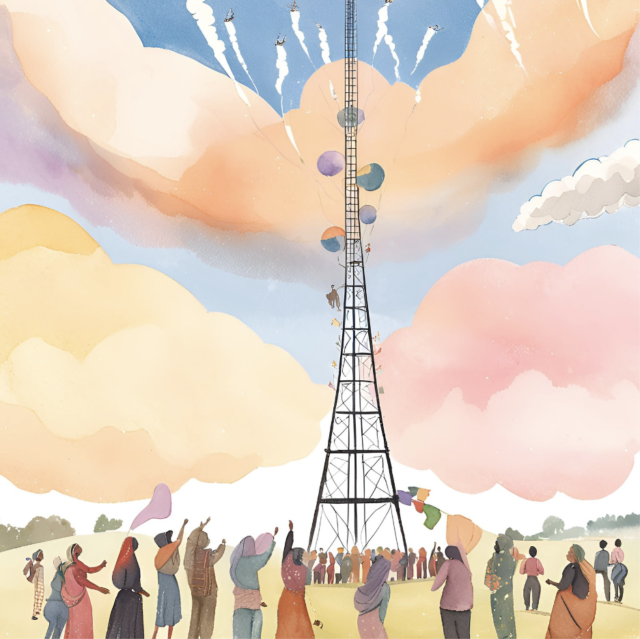
Raise your antenna higher to claim the future
The world is always changing. Just a decade ago, none of us could have imagined the huge democratisation of success where almost anyone from anywhere can become a millionaire or a celebrity if they were doing the right thing at the right place and the right time.

The trick of course is to know those three things. That right time, place and activity. What careers will be hot in a few years? What new technology will again overhaul how we connect, live and work? And most importantly, what should we be doing right now so that we have the right skills and experience to catch that next big bus when it comes?

Consider first how you got to where you are right now. You may be that rare one who always knew what they should be doing in life, but more typically, your career was decided by the marks you got in boards and what your friends and your father’s friends told you you should be doing.
And so it went on with college and career. You kept looking only one step ahead, where the others before you had gone, and followed them.

But the world kept changing around you. Not once, but twice and even three times by the time you entered mid-career. Technologies and platforms you had never dreamt possible when you were starting off. The old hierarchies broken, new modes of working and living. The most coveted careers of yesterday now stagnant and laying off by the tens of thousands.
And yet, when I was working in the NCR area more than a decade ago and considering a radical career break, the phrase I heard most often was ‘Aaj ke zamaane mein’. ‘In today’s world’. This was a world before Uber, Zomato, Zoom, AI, Covid, Netflix, Tiktok, stand-ups, and yet, everyone was certain that they knew exactly where the world was headed.
This certainty killed their curiosity. They looked at only what was trending and not what was nascent.

For here is the thing: ideas of the future look impractical, and even stupid, at the beginning. Let me cite two examples.
Working for the world’s biggest retailer at that time, I sat at a meeting where the idea of having groceries delivered to homes was deemed too costly and vetoed without even a minute of discussion. Then, a colleague got an offer from a new e-commerce startup, to head their merchandising, but he rejected it, laughing how his particular category could never be sold online. If my company had ran even a pilot of that idea then, they wouldn’t have had to buy in a few years a newfangled e-commerce platform for many billions of dollars: they would have built the business by themselves. And that colleague would be now an angel investor with the money he would have made when that startup went for its IPO.
The problem was not that they rejected the idea, one is allowed to be wrong about the future, but that they did so without much thought. They knew their today, and just extrapolated it to the future.
But the future is no longer an extrapolation: it is one disruption after another. Which is why VCs prefer young entrepreneurs when betting on the future: because they do not know enough of today to know what is not possible tomorrow.

Unfortunately, despite the radical disruptions we have seen in the past decade, I find that most people still don’t want to learn. They would rather be certain than curious. Because curiosity means leaving an opening in our view of the world, a seed of doubt, rather than the closure we seek.

Closure is always a false position. It is a trick of gestalt, the human tendency to build a complete picture from partial information. Our worldview is limited by how much we can see around us. The people we interact with, the news we get. Think again of your schooldays. When your only source of information was your peers, who were as clueless as you. Think how that world around you has expanded since. The many cultures you have travelled through within and without the country, the people you meet daily who come from vastly different backgrounds and skillsets (sales, marketing, HR, finance, tech, security, etc.), the many debates and discussions available online on the state of the world in technological, social, ecological and cultural fronts.
And yet most of us would still rather sit with people like ourselves, with mostly the same backgrounds and industries, or follow people whose opinions exactly matches what we want to see the world us. We do not invite difference in our thinking, only reinforcement.
And then the world changes once over again, not caring about our certainties, and we are again left reacting to it rather than preempting it.

So raise your antenna higher. Receive more from the world beyond your comfort zone. As I said, you have access now to a far greater pool of ideas than you ever had, and you are wasting that opportunity if you are sitting in an echo-chamber.
Look beyond how things are – and reflect instead why they are that way. Because disruptions arrive when some factor underpinning the current reality is challenged.
Read. Not time management books but what bona fide scholars are writing from their research into the sociopolitical shifts of our time and our psychological makeup. You can google ‘Top 10 books’ on virtually any topic and even if you read 3 of them by the end of a year, you would know vastly more about the world.
Question your water. Those fundamental assumptions that you don’t even realise that they are only assumptions. This post here conducts a test to ascertain that.
Most importantly, know yourself. Most of us come from backgrounds and schooling where we never really got to consider who we are. But today we have the resources where we can. Unfortunately, we are now caught in a late-capitalist machinery which conspires to keep us perpetually busy either producing for it or passively consuming.
You are not your job, not your XUV, not your flat. You are your values, your peace and how you touch others’ lives. You are your core inner purpose, unique to you in this world, and that alone can tell you where you can really fit into the present and the future and make a real impact.
So, slow down. Silence that constant noise around you, find that time to reflect upon these questions sincerely, and believe me eventually you will start discovering them.
Carl Jung said ‘The world will ask who you are, and if you don’t know, the world will tell you’. And this is how most of us live, with the world telling us who we are and what it is.
But the world lies to us. It does not tell us that what we see of it is only a fraction of the smallest fraction, and that cataclysmic changes have begun somewhere that will upset everything we know.
And the world cannot tell us who we essentially are. This is something that we have to tell the world. That we are more than just people who follow the herd. We are ourselves.
If we know what that is strongly enough, the world will make room for us. Even bend to our will.

Raise your antenna higher.

When life forces you to make a U-turn

We are so afraid of hitting that wall where our best-laid plans come to halt.
I hit such a wall into my thirties. After three decades of slogging through academics, passing through elite colleges and landing the cushiest jobs, I no longer related with what I did for a living. I knew I could no longer go forward. But there was no sideways for me, for this career was all I had skilled myself up for. And surely – after coming so far – I could not go all the way back! Right?

Opportunity cost can be an ugly term when we apply it to our lives. When we measure our happiness and dawning sense of purpose against the years put into something that no longer works. The hard-earned degrees no longer relevant, and even worse, the monetary loss when we are no longer compounding on all that investment of our years. But my restlessness was thankfully so strong that I could no longer continue, and so I did go all the way back. Climbed back into the crucible, to melt and reforge myself.

The thing I learnt from this little death was that life plans can change. We can grow past our earlier selves. The world we step into expands and throws us possibilities we never knew existed when we set our plans. Life-altering events happen that put into question all our previous beliefs. Or we just grow tired of being who we are one day.

The wall we hit inside is because our plan no longer leads towards the new vague direction life is showing us.

Of course, I was afraid when I had to begin all over again. And violently ashamed. These were days before the Great Resignation, and the background I came from there was no concept of passion – only hobbies. I dropped out of the radar for a few years. Mumbling some made-up excuse when cornered with the inevitable ‘So what are you doing these day?’. Feeling an utter failure before those who had once looked at me as an example.

In the initial years, I thought my way out of this fear and shame would be quickly piling up new achievements. But here I was falling into the old trap of my earlier life: believing that my life’s success is measured by some outward-directed metric rather than the emerging sense of purpose and peace I was striving towards.

If you can understand these three things, you will be better equipped than I was to deal with this great fear at the start:

  1. The key to living is what makes you feel alive. Sometimes you are done with the past and some new journey is beckoning within you.
  2. And hence the wall is nothing more than your life telling you to reconsider and take a turn.
  3. Something will happen, no matter which path you take. Emergence lies at the very heart of life, i.e., things will grow from where they are. And when you choose to follow the new direction life is taking you towards, what will emerge will be more organic to you. More suited to who you are becoming now and where your purpose and peace lie.

Why it matters we call the glass half-full

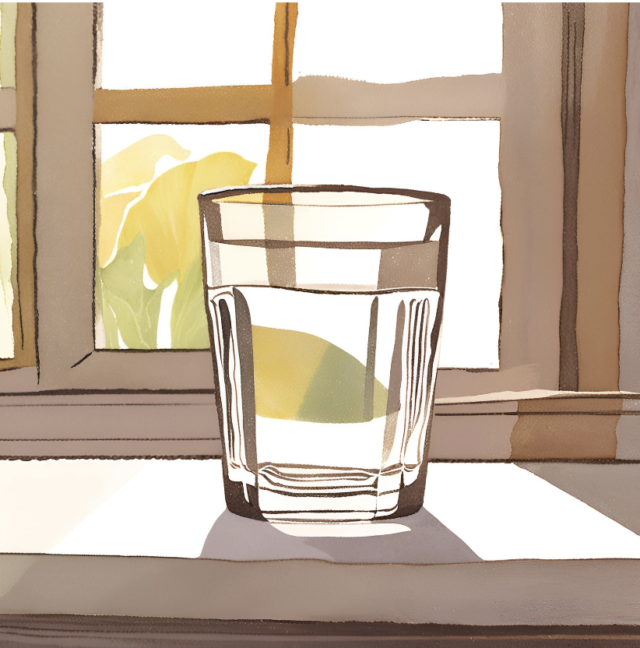
Whether we call the glass half-empty or half-full matters because it defines the direction we’re looking towards. 

Calling it half-empty means that we are measuring what is there with what is still missing in it. And calling it half-full celebrates how much is already there.

These two different outlooks reflect in the passion and perseverance we bring into anything we do.

A few years ago I was running an online channel where we broadcast interviews and panel discussions around community issues. We didn’t have enough budget to get professional anchors, but I still managed to recruit a small bunch from my theatre circle who were willing to work for a minimal fee because they believed in our content. And in no time they were improving by leaps and bounds and discovering their own unique styles.

But one of my partners did not see it that way. Right from day one, he kept complaining they were not as good as ‘Oprah Winfrey’! That is, he could only see how short they were falling, the half-empty bit. 

This thinking led to two outcomes:

Firstly, the feedback he gave them was almost entirely useless to them because it came from this imagined Oprah standard in his head, and not from where they were right now. (Imagine presenting for the first time before a really big audience, and the feedback you get is from how much better Steve Jobs was, rather than a more useful “Move across the stage a little more” or “Project your voice more”.)

Secondly, he was missing out on the journey the rest of us were having: of steadily improving with every show. He was missing out on the fun of learning.

Now extend this example to the obscene standards many of us demand of our own selves. The same two problems surface here. 

First, we are setting ourselves goals that are all but impractical. Remember the many, many times we all have promised ourselves that starting tomorrow, we’re going to overhaul our whole lifestyle. Adopt the whole seven thundering habits of highly successful people. That motivation lasts out as long as any New Year resolution: a week at the max. Because when the goals are inorganic – that is not coming from where we are right now – we are setting ourselves for failure. 

Second, it takes the fun out of learning. Instead of looking at our steady progress, we are measuring only our shortcomings. Instead of focusing on the 2-3 new things we are learning every day, we are kicking ourselves for all that we don’t know yet. We become our own hard and impatient taskmasters, and that leaves us feeling so demotivated that we ultimately drop out of the game altogether. 

Improvements are always incremental before they suddenly explode into non-linear results; sometimes so tiny we might not see them emerge for a long time. It is the law of the learning curve – and this is where a half-full attitude can make such a difference. It can give us the inspiration to persevere just long enough to reach that tipping point when suddenly change happens.

Call it optimism. Believing that things are looking good regardless of how they really are, because this belief creates its own self-reinforcing loop.

And with this optimism, what seems like a shortfall to a half-empty mindset is celebrated as a minor but significant improvement by the half-full mindset. 1% more than yesterday’s half-full. 

So wherever you are in your career, your career and personal projects, your life — stop looking forward for a while at where you want to go, and look back. See how far you have come. 

You are already half-full. 

And now look forward and go ahead with the belief that you are doing good and getting there wherever you want to go: one tiny step after another.

Find your Water – A Test

Two young fish swimming in the sea meet an older fish. The older fish asks them by way of greeting ‘How is the water?’ After he swims away, one of the younger fish turns to the other and asks, ‘What is water?’

David Foster Walter told this simple parable in his famous commencement speech at Kenyon College to highlight how we all swim in our own tanks without realising we are in one. He was referring to all the core beliefs deciding our life choices, that are so sum total for us that we don’t even realise that they are working on us.

So, I want you to do an exercise.
In the statements listed under each category below, tick the ones that strike you on first sight as uncontested truths. Just that first impression of 2-3 seconds.
Before you start, one thing: all of these statements contain a lot of truth; so don’t feel ashamed if you identify with them completely. Just try to be completely honest with yourself and see how deep your water goes.

How you measure time

1. I want to be present more for my children, partner, fast-ageing parents – but there is not enough time. 

  1. 2. I want to take out more time for myself, do things pending in my mind for so long, catch up with friends I haven’t met since ages – but again: not enough time.

3. The way to stay in control in life is to have a handle on everything happening around me.

4. There is only one way to get the best of everything in life and that is better time management.


How our world and lives need to be organised

5. The key to a successful life are productivity and efficiency.

6. We’re all in a rat race, whether we like it or not. That’s the only way to survive.

7. People work only for incentives, and those incentives have to be tangibly real.

8. The value of anything is ultimately decided by the market. It should at least have some tangible impact.

9. The worth of anyone is largely decided by their position, title, and wealth.


How to succeed in life

10. Fostering competitive spirit in our kids is a must.

11. Nice guys (and girls) finish last. 

12. Values like ahimsa made Indians weak and less competitive.

13. Hustle is the only way to survive and thrive in today’s world.

14. It’s wiser to be pragmatic and survive, than to stick to our conscience in a losing cause.

How to have a fulfilling life

15. The more likes I have, the more people who follow me, the more worthy I feel.

16. Life has to be treasured in moments, and those moments have to be captured so we can relive them later.

17. I need to connect with my inner being so that I can perform better in life and socially.

18. If I do something, it has to be something I can tell others about now or in the near to mid future.

19. Self-worth comes from proving yourself to the world. 

20. I have to go through a bucket-list of things to do before I die.

21.I have to stay up to date on current news and trends.

22. My purpose in life is to self-actualise.


So, how deep is your water?


Score 1 for every statement you tick-marked, and see below where you stand:

0-9: You know quite well the edges of your tank

10-15: Okay, you have sometimes come up against the glass

16-22: What water?

Also, note which categories you score especially high on.


As I said, these are all statements with lots of truth in them. But I want you to recognise for yourself how deeply you take some of them as the “whole truth”. Because when a thing becomes so obvious to us that we can no longer see it, we forget we have a choice.

Seeing our water does not have to mean we no longer choose to swim in it. But it can still —

1. Lead us to change some things in it that we’re unhappy about, but see right now as unavoidable sacrifices towards greater goals.

2. Broaden the spectrum of choices we are exercising in our lives, especially at the most fundamental level.

3. Make us begin to explore beyond our water, to find a more natural fit for us. Ways of living and being that are closer to who we fundamentally are.

4. At the very least, it can help us make peace with ourselves. Sometimes we do not get to choose our water. But recognising it can still liberate us, for we can realise that the fault is not in us but the circumstances imposed on us by life. We have not failed on some universal metrics, just the ones that were not built entirely for us. Hence, instead of being ashamed of our failures, we can clap ourselves on our backs for still persisting – and doing the best we can.


If you want to share your scores and thoughts from this exercise, you can reach me at ownyourstory.in@gmail.com. Hearing back from people whose lives I touch even in the smallest way is my greatest reward. 🙂

Popular Posts

My Favorites

Why it matters we call the glass half-full

Whether we call the glass half-empty or half-full matters because it defines the direction we’re looking towards.  Calling it half-empty means that we are measuring...